
smashdog.org Logo smashdog.org Contact Us
Contact Us

Setting Up Your Reading Nook: Light and Comfort

6 min read Beginner April 2026

Positioning, natural light angles, and supplementary lighting that won't cause glare on the page. Everything a reader actually needs to know.

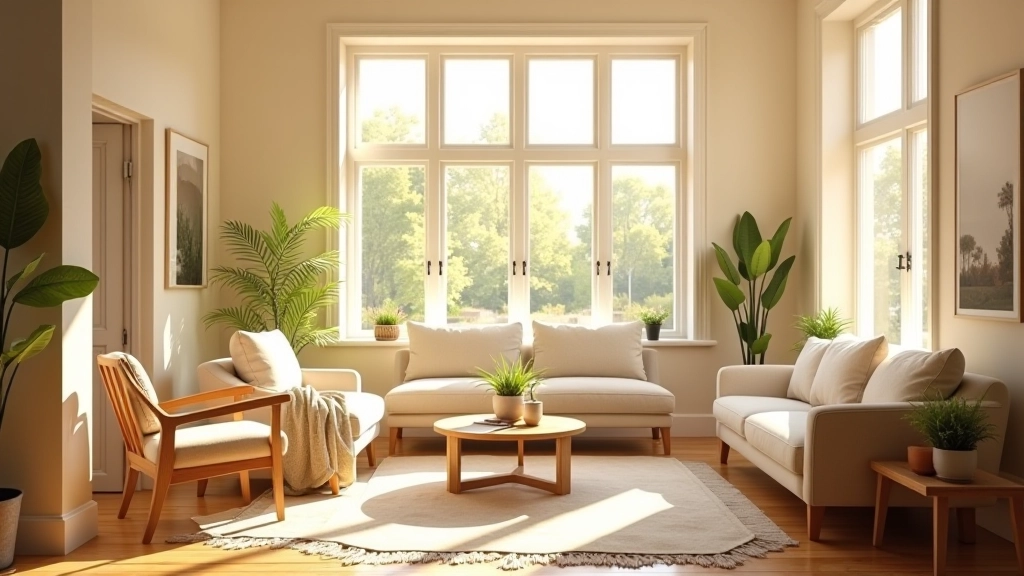
Reading nook with natural daylight from window, comfortable chair, side table with lamp, and bookshelves
Eleanor Hartwell

Author

Eleanor Hartwell

Senior Lighting & Atmosphere Specialist

Eleanor is a London-based lighting designer with 16 years' experience creating warm, functional atmospheres in UK homes through expert lamp layering and daylight optimisation.

Find Your Perfect Position

The best reading spot isn't about having the fanciest chair. It's about positioning yourself where light falls naturally without creating glare on your page. Window seats get all the attention, but they're not always ideal — direct afternoon sun can actually be harsh and tiring for your eyes.

Look for a spot with indirect natural light. North-facing windows work brilliantly in the UK because they provide consistent, soft light throughout the day without harsh shadows. If you've got south or west-facing windows, you'll want to sit slightly to the side so the light hits your book at an angle rather than bouncing straight into your face.

Distance matters too. You want your light source about 2-3 feet to the side and slightly behind your shoulder. That way, light lands on your page without creating a shadow from your head. Test different positions by sitting there for 10 minutes with a book — your eyes will tell you instantly if it's right.
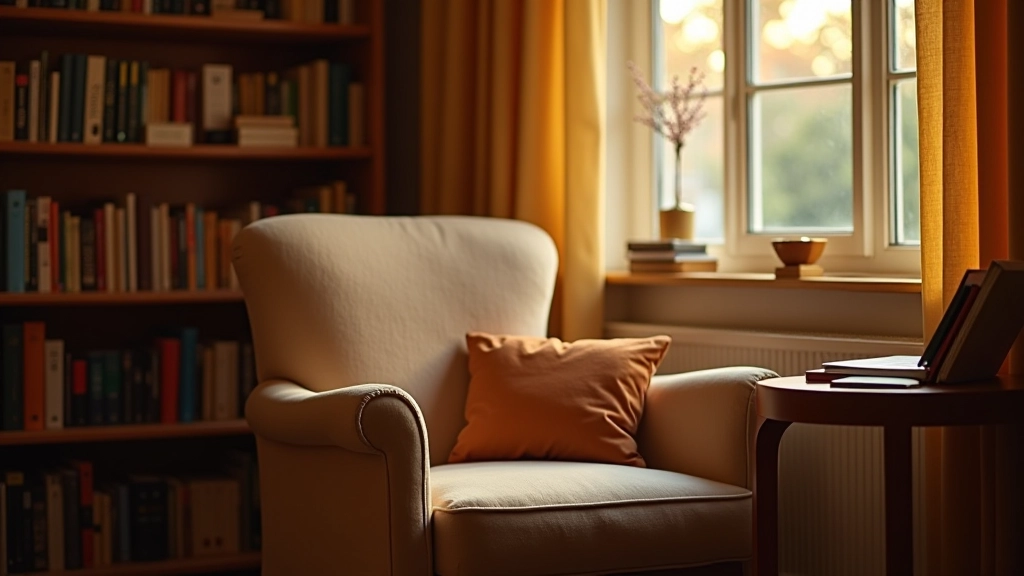
Reading chair positioned by window with natural light falling at an angle, cozy interior with warm tones
Table lamp with warm bulb next to reading chair, creating soft ambient lighting in evening setting

Layering Light for Evening Reading

Once natural light fades, you'll need supplementary lighting. Here's where most people get it wrong — they use a single bright overhead light that creates harsh shadows and tires your eyes. You need layers.

Start with a task light. A good reading lamp should be 40-60 watts equivalent (LED) and positioned to light your book, not your face. Look for lamps with a shade that directs light downward rather than scattering it everywhere. A desk lamp or swing-arm wall lamp works perfectly — you can angle it exactly where you need it.

Add ambient light separately. A second, dimmer light source — perhaps a floor lamp across the room or wall sconces — fills in shadows and reduces contrast between your book and the surrounding darkness. This makes your eyes work less hard because the room isn't black around a bright white page.

Colour temperature matters more than brightness. Warm white (2700K) light is essential for evening reading. It's easier on your eyes and won't interfere with your sleep cycle the way cool white (4000K+) does. Most UK homes are shifting to LED, which is brilliant — you can now get warm, dimmable LEDs that cost pennies to run.

Eliminating Glare and Shadows

Glare is your enemy. It's that annoying reflection that makes you tilt the page or shift your position every few minutes. It happens when light bounces directly off glossy paper or shiny book covers straight into your eyes.

The solution? Angle your light source. Position it so light hits your page at roughly 45 degrees — not straight down, not from the side. You'll know you've got it right when you can see the words clearly without any bright reflections.

If you're still getting glare, the lamp might be too bright. Don't reach for a higher wattage — reach for a dimmer or shade. A frosted shade or fabric diffuser softens the light beautifully. We're not trying to light a warehouse; we're lighting a page. Most readers are happy with 30-40 watts of warm light, positioned well.

Shadows are trickier. They happen when your head blocks the light from reaching part of your page. Solution? Dual lighting. Position your main task light on one side, and add a secondary light source on the other. You don't need both bright — the secondary can be quite dim. It just needs to fill the shadow.

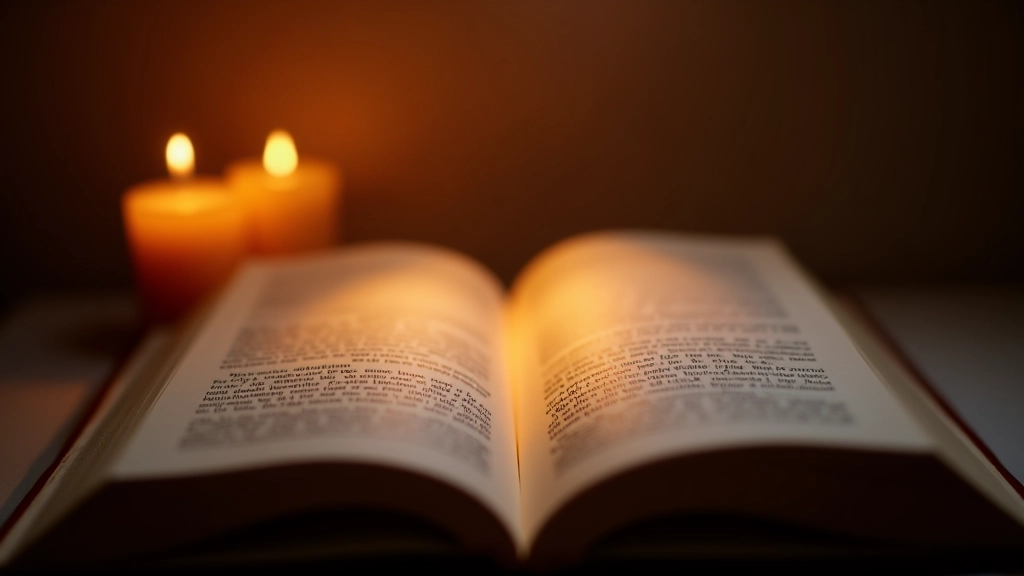
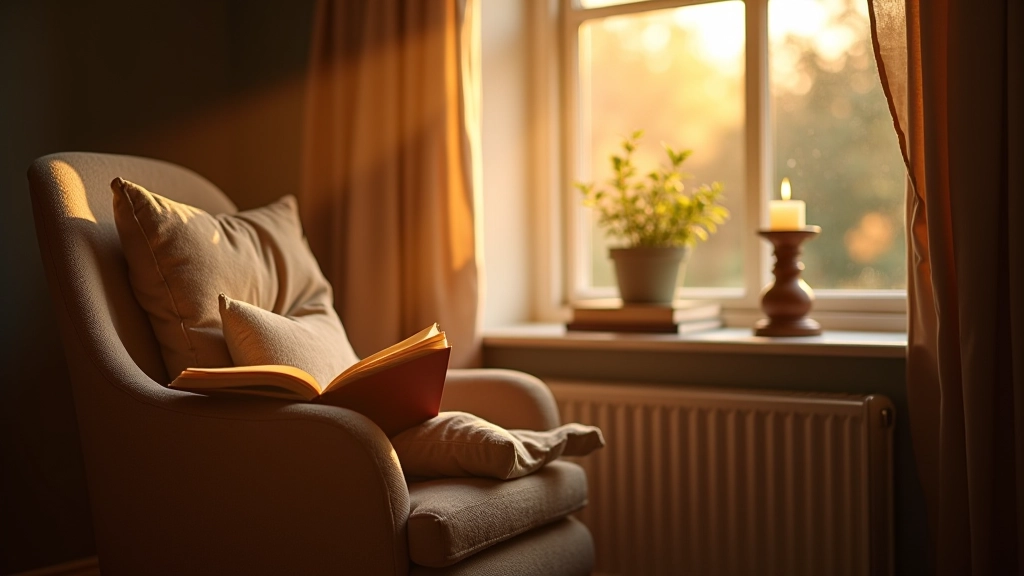
Close-up of open book under reading lamp, page clearly illuminated without glare or harsh shadows

Creating a Complete Reading Environment

Light's only half the battle. You need comfort too — a chair that supports your back, a small table for your tea, perhaps a footrest. These details matter because you're not just sitting there for 10 minutes. A good reading session is 45 minutes or more, and if your back aches or your neck's strained, you'll stop reading.

The Chair

Firm enough to support you, but with enough padding that you're not perched uncomfortably. Armrests at the right height help — your arms shouldn't have to work to hold your book. A slight recline is comfortable; fully flat makes reading awkward.

Side Table

Even a small one. Somewhere for your tea, a notebook, or a bookmark. It's practical, and it signals to everyone else that this is a dedicated reading space — not just a corner of the sofa.

Temperature

You'll sit still for a while, so you'll get cold more easily. A blanket nearby is brilliant. And make sure there's no cold draught from a window — you'll notice it immediately when you're settled and concentrating.

Minimal Distractions

Position your nook away from the TV or high-traffic areas. You don't need silence, but you do need a space where people won't interrupt every five minutes.

Adjusting for the Seasons

UK daylight changes dramatically across the year. In summer, you'll have natural light until 9 PM. In winter, it's gone by 4 PM. Your reading nook needs to adapt.

Summer's easy — sit by a window and let natural light do the work. You might need a light lamp for afternoon glare, but mostly you're just enjoying daylight. The challenge is keeping cool enough to concentrate.

Winter's different. You'll rely entirely on artificial light for months. This is when investing in proper task lighting pays off. You're reading in darkness, so your eyes need good light to avoid strain. Warm white becomes even more important — cool blue light in dark rooms disrupts sleep, and most winter reading happens in the evening.

Spring and autumn are in-between. Some days you've got enough natural light; other days you'll need to switch on the lamp by 5 PM. Having flexible lighting — dimmable lamps, adjustable task lights — means you can adapt without redesigning your whole setup.

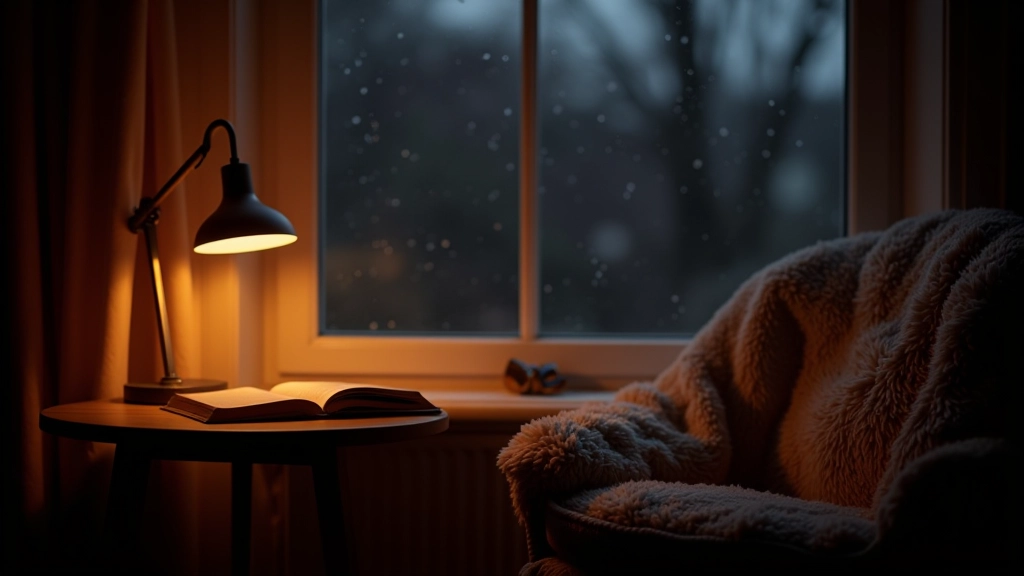
Reading nook in winter evening with warm lamp light, blanket, cosy atmosphere, rain visible on window

A Note on Individual Needs

This guide covers general principles for setting up a comfortable reading space with good lighting. Everyone's eyes are different, and lighting preferences vary. If you experience eye strain, headaches, or discomfort when reading despite proper lighting setup, it's worth consulting an optician or eye care professional. They can assess your specific vision needs and recommend adjustments tailored to you. Some people benefit from blue light filtering, others from specialist reading glasses — professional advice is always valuable.

You're Ready to Build Your Nook

Setting up a reading nook isn't complicated. You need good positioning, layered lighting, and comfort. Start with what you've got — move a chair near a window, add a lamp you already own, and test it out. Most of the best reading spaces come together gradually, as you figure out what works for you.

The goal's simple: read without squinting, without glare, without your back aching. That's it. Everything else — the aesthetics, the ambiance — follows naturally when the fundamentals are right.